How Long Does Water Damage Restoration Take in Everett, WA?
Most water damage restoration in Everett, WA takes 3 to 5 days for drying and 1 to 3 weeks for repairs. A small leak can finish in 24 to 48 hours, while severe flooding can take several weeks to months.
Drying and restoration are not the same thing. Drying is the middle step. The full job also includes emergency response, water extraction, structural drying, mold checks, insurance approval, and reconstruction. Many homeowners get confused because one company says 3 days and another says 3 weeks, and both can be right. The first is talking about drying only, the second is talking about the full job from first call to final paint. This guide explains both, in simple language, so you can plan your time, your budget, and your stay at home with confidence.
Timeline at a Glance
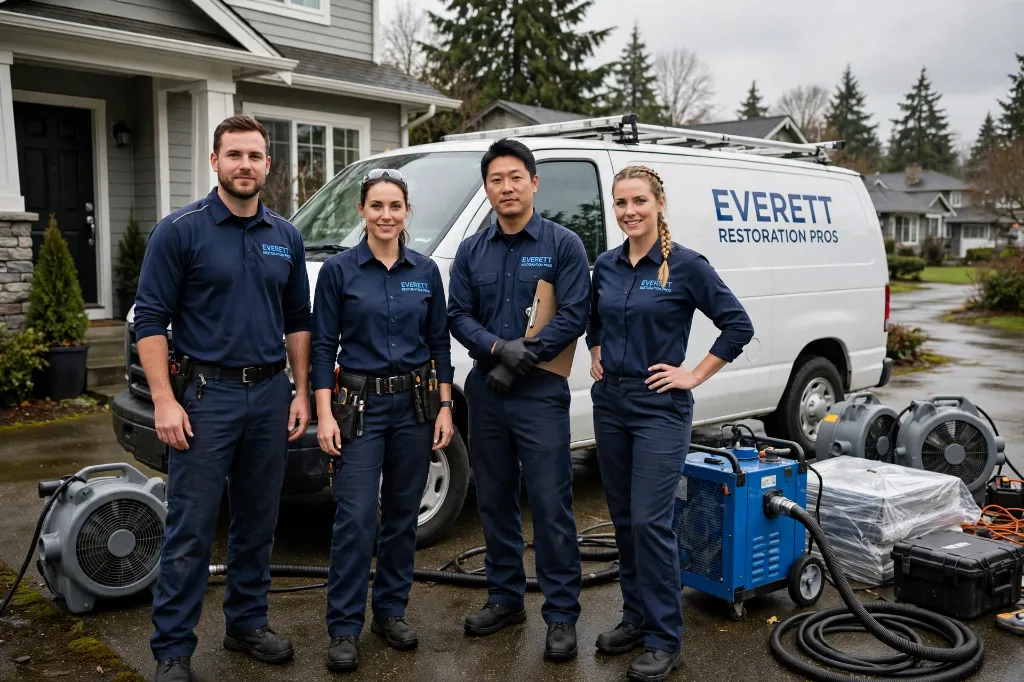
Most clean-water jobs in Everett follow a simple pattern: fast extraction, 3 to 5 days of drying, then 1 to 3 weeks of repairs. The total is usually about 2 weeks for a standard home.
The table below gives you the planning ranges that industry guides and Everett competitors use. Use it to set expectations, not as a promise for your home. Your actual time depends on four things: how much water entered, what materials it soaked, how fast help arrived, and whether insurance approval is needed. A small leak found the same day is a very different job from a basement that stayed wet for a week.
Scenario
Total Time
Minor leak
Moderate flooding
The problem with a single number is that it hides the real work. If someone promises 2 days for a flooded basement, ask whether that is drying only, or drying plus repairs. The solution is to ask for a phase-wise timeline in writing, with daily moisture readings. Everett Restoration Pros gives you that written scope on day one, so you know what happens each day, and when equipment can come out.
Timeline by Phase
Restoration moves in four clear phases, and each phase has a different job, a different team focus, and a different time.
Phase
Time
What Happens
1. Emergency Response
2. Structural Drying
3. Mold Check
4. Reconstruction
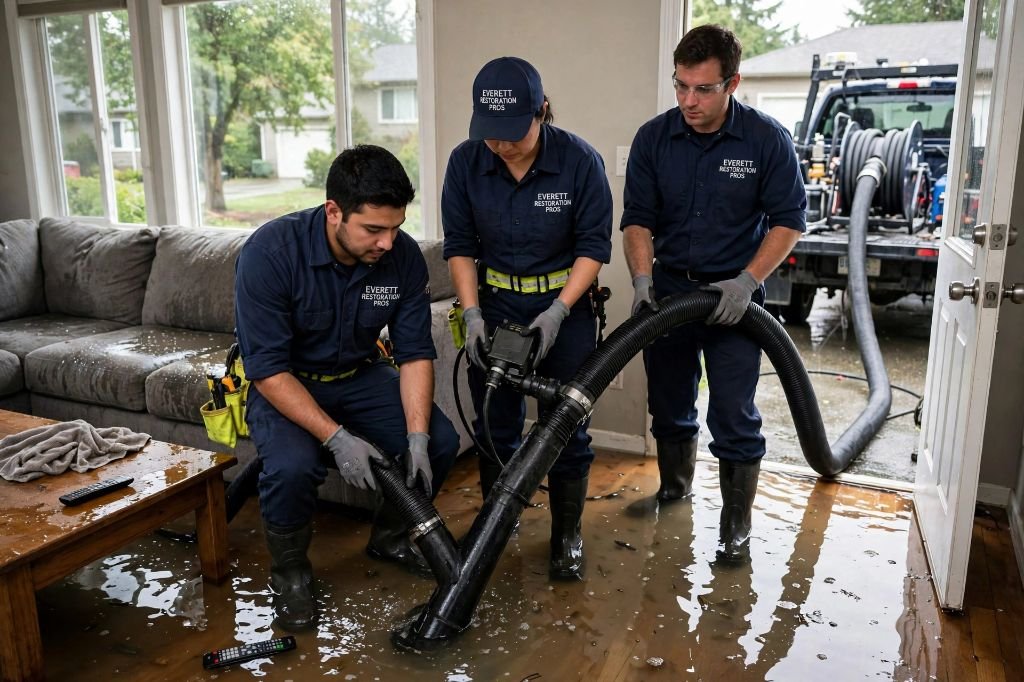
Phase 1 is about stopping damage. Crews stop the source if it is safe, remove standing water, and photograph everything for insurance. Phase 2 is about drying the structure, not just the surface. Air movers push dry air across wet walls and floors, LGR dehumidifiers pull moisture from the air, and moisture meters check wood, drywall, and concrete every day. Phase 3 is about safety. On days 3 to 5, the team checks for hidden moisture and mold risk, because mold can start in 24 to 48 hours. Phase 4 is about rebuilding. Drywall, flooring, trim, and paint are replaced only after moisture readings reach the dry standard, so new material does not trap water behind it.
Problem:
Delay in any phase pushes the next phase back. A 24-hour delay in extraction can double drying time, because water moves deeper into materials. Insurance approval can also pause reconstruction, even when drying is done.
Solution:
Call 24/7 the same day. Everett Restoration Pros offers 24/7 emergency response in Everett, WA, with a 30- to 60-minute dispatch goal, same-day extraction, photos, moisture logs, and a written scope for insurance, so no phase is left waiting for information.
Drying Time by Material
Drying time changes a lot by material, and this is where many timelines go wrong. A home is not one material, it is a mix of carpet, drywall, wood, concrete, and insulation, and each one dries at a different speed.
Carpet and pad are the fastest to look dry, but the pad underneath holds water and grows mold fast, so it is often replaced even when the carpet looks fine. Drywall is porous, so it soaks water up from the floor like a sponge, and soaked drywall is often cut out rather than dried. Hardwood is the slowest to dry safely, because fast, uneven drying can cup and warp the boards, so drying mats and slow, controlled drying are used, and heavy saturation can take 2 to 4 weeks. Concrete looks dry on top in a day or two, but a slab can hold moisture for 1 to 2 weeks, and that moisture can damage new flooring if it is covered too early.
Problem:
A floor can feel dry while wall cavities, insulation, and subfloors stay wet. That hidden moisture causes mold, rot, and warped wood weeks later, and it is the most common reason a repair fails.
Solution:
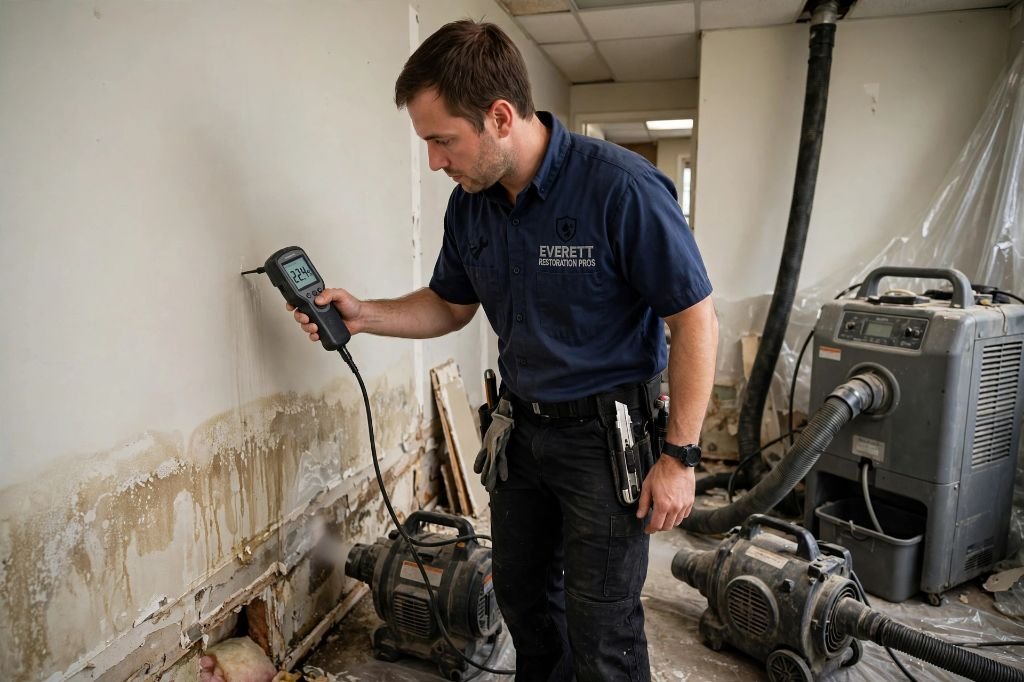
Dry to a target, not to a feeling. Thermal imaging cameras and moisture meters find hidden water behind drywall and under floors, and daily readings prove each material is dry before repairs start. This moisture mapping protects your health, your home value, and your insurance claim, because the insurer can see the numbers, not just a promise.
Drying Time by Water Type
Water type changes both time and safety, because clean water, grey water, and black water need different cleaning, removal, and drying protocols.
Category 1 (Clean)
Category 2 (Gray)
Category 3 (Black)
Category 1 clean water comes from a supply line, a burst pipe, or an appliance, and it is the fastest to dry, because it needs less removal and less disinfection. Category 2 grey water comes from a dishwasher, washing machine, or toilet overflow, and it carries soap, food, and bacteria, so it needs more cleaning, and wet material is more likely to be removed. Category 3 black water comes from sewage, floodwater, or water that has sat for more than 48 hours, and it is the slowest and most serious. Porous materials contaminated with Category 3 water cannot be salvaged, so drywall, carpet, and pad are removed, the area is disinfected with protective gear, and drying starts again on the clean structure.
Problem:
Treating all water the same is unsafe and slow. If sewage water is dried like clean water, bacteria and mold stay in the walls, and the home is not safe to live in, even if it looks dry.
Solution:
Identify the category on arrival, protect your family, and follow the correct removal and disinfection protocol for that category. Everett Restoration Pros provides sewage cleanup as a separate, documented service, with full protective gear, safe removal, and disinfection, so the timeline is honest and the home is truly safe.
Mold and the 24 to 48 Hour Rule
Mold can begin growing within 24 to 48 hours on wet drywall, carpet, and wood. Fast drying in that window is the best way to prevent mold.
Problem
The problem is that mold does not wait for insurance approval, for a convenient day, or for the room to look dry. If drying starts late, or if hidden moisture stays inside walls, mold can grow out of sight, even when the surface looks clean. A musty smell, peeling paint, bubbling wallpaper, or warped wood are early signs of hidden moisture and mold. Once mold is established, mold remediation adds 5 to 14 days to the project, plus testing, treatment, and HEPA filtration for clean air.
Solution
The solution is to win the first 48 hours, and to inspect on days 3 to 5. Everett Restoration Pros checks mold risk during drying, uses thermal imaging for hidden moisture, and, when needed, provides mold remediation as a separate, documented service. The EPA and IICRC S500 guidance both point to drying within 24 to 48 hours to prevent mold in most cases, and to keeping indoor humidity below 60 percent, ideally 30 to 50 percent. This step protects your health, especially for children, older adults, and people with breathing problems, and it gives your insurer a clear, honest record.
What Delays Restoration, and How to Speed It Up
Late discovery is the biggest delay, because water has more time to soak and mold has more time to grow. Insurance approval can take 1 to 3 days for minor jobs and up to 3 weeks for major jobs, and that approval can pause reconstruction even when drying is done.
Effect
Late discovery
More soaking, more mold risk
Call fast, stop the source safely
Hidden moisture
Repairs trap water behind new walls.
Daily moisture readings, thermal imaging
Insurance approval
1 to 3 days minor, up to 3 weeks major
Photos, moisture logs, Xactimate scope, fast filing
Mold or sewage
Adds days to weeks
Early inspection, proper removal and disinfection
Permits and materials
Clear scope and early ordering
Other delays include permits, flooring or cabinets that are out of stock, and subcontractor schedules for electrical or plumbing work. A job that could finish in 2 weeks can stretch to 6 to 8 weeks if mold is found late, with extra living costs for the homeowner, including hotels and meals.
You can speed up the job by calling fast, stopping the source safely, taking photos before moving anything, and keeping a list of damaged items for insurance. Do not use household fans in a sewage area, because they can spread germs and mold spores. Do not paint over wet drywall, and do not remove drying equipment early, because that traps moisture. Ask for a written timeline, daily moisture readings, and a clear scope, and share all documentation with your adjuster right away. Everett Restoration Pros offers a free assessment, clear upfront pricing, and direct insurance billing to help with that process, so you are not left to explain the damage alone.
Why Everett Takes Longer
Everett homes face heavy rain, high groundwater, and sump pump failure. Older homes near Port Gardner and Bayside often have aging pipes and vulnerable basements.
The problem is climate plus construction. Damp Pacific Northwest air slows evaporation, and cold, wet weather from October to March needs more dehumidification. Concrete basements dry slowly, and storms can cause many calls at once, which can affect scheduling for any local company. Homes near the Snohomish River and low areas in Snohomish County face extra pressure from groundwater, and that water can keep coming back if drainage is not fixed.
The solution is local knowledge plus industrial equipment, not open windows alone. A local Everett team knows Snohomish County weather, soil, and building styles, measures moisture daily, and does not remove equipment until readings are back to normal. That honest timeline is better than a fast promise that leaves hidden moisture behind, because hidden moisture is what causes the second repair bill.
We serve 98201 Downtown Everett, Bayside, Riverside, Delta, and Northwest Everett; 98203 South Forest Park, View Ridge-Madison, Glacier View, Boulevard Bluffs, and Lowell; 98204 Westmont, Holly, Paine Field Area, and Casino Road; 98208 Silver Lake, Cascade View, Twin Creeks, and Pinehurst-Beverly Park; and 98213 Providence Regional Medical Center Area, plus Snohomish County.
Our Services in This Timeline
Water extraction, structural drying, mold remediation, sewage cleanup, reconstruction, and commercial restoration are not separate jobs, they are steps in one timeline, and each step solves a different problem.
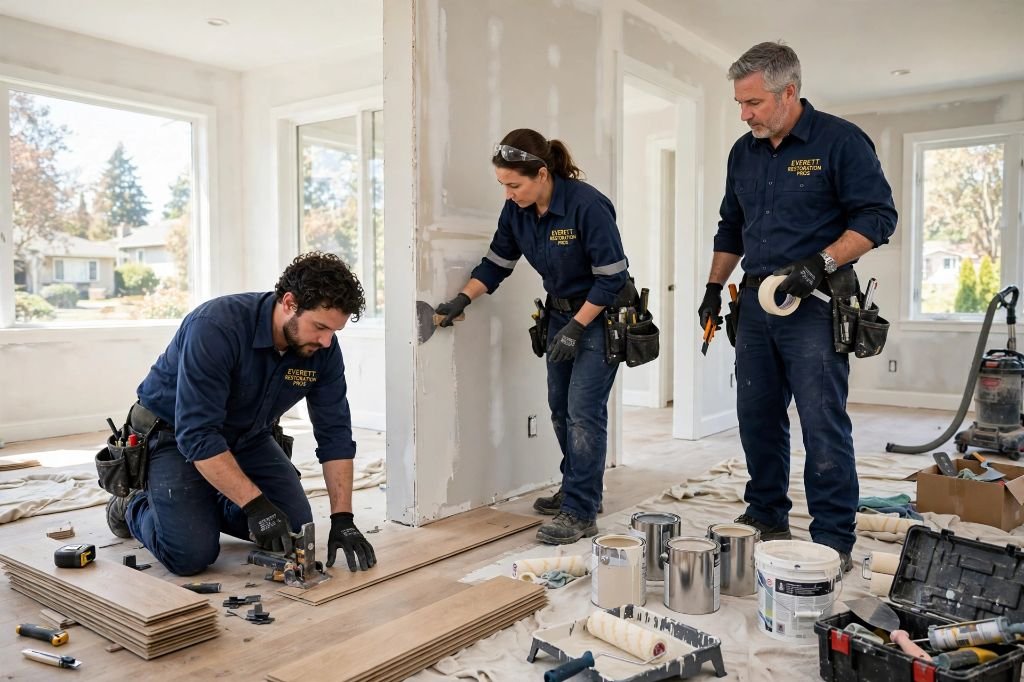
Water extraction is the first service, and it solves the problem of standing water. Crews use submersible pumps and truck-mounted extraction to pull water from floors, carpet padding, and concrete pores, far faster and safer than a home shop vacuum, especially for deep water. Structural drying is the second service, and it solves the problem of hidden moisture. Air movers and LGR dehumidifiers dry walls, subfloors, and framing, while thermal imaging and moisture meters prove the structure is dry. Mold remediation is the third service when needed, and it solves the problem of mold growth after the 24 to 48 hour window. It removes mold, treats the area, and uses HEPA filtration for clean air. Sewage cleanup solves the problem of Category 3 contamination, with full protective gear, safe removal, and disinfection. Reconstruction solves the final problem, a home that is dry but not yet livable, by replacing drywall, flooring, trim, and paint, and returning the home to its pre-loss condition. Commercial restoration solves the business problem, by limiting downtime, protecting stock, and keeping clear records for insurers.
Each service is documented with photos and moisture logs, and direct Xactimate billing helps your adjuster approve the scope faster. That documentation is value in itself, because it protects your claim and your home value.
Can I Stay in My Home, and When Can I Move Back?
You can often stay in your home during drying if the wet area is limited, power is safe, and there is no sewage contamination. You may need to move out for sewage, mold, or large reconstruction work.
The problem is safety and comfort, not just convenience. Drying equipment is loud and runs day and night, rooms may be sealed off with plastic containment, and sewage or mold work needs protective gear and containment that is not safe for children or pets. People with breathing problems, allergies, or asthma should stay away from wet and contaminated areas, even if the rest of the home feels fine.
The solution is to ask the team for a day-by-day plan, not a vague promise. They can tell you which rooms are safe, when equipment will run, when it will be checked, and when moisture readings allow repairs and move-back. In most minor cases, you can move back in by day 4 or 5, once drying is verified. For larger jobs, plan for 2 to 3 weeks, and for severe jobs, plan for longer, with insurance help for temporary living costs where your policy allows. Planning for the longer time, and finishing early, is far less stressful than planning for 2 days and living in a construction zone for 2 weeks.
FAQs
How long does water damage restoration take in Everett, WA?
Most drying takes 3 to 5 days, and full restoration takes about 2 weeks for a standard home.
Severe flooding can take several weeks to months.
The exact time depends on water type, material, and insurance approval.
How long does it take to dry a house after a flood?
Structural drying commonly takes 3 to 7 days.
A small room may dry in 24 to 72 hours, while a basement or whole-home flood may take 7 to 14 days.
Hidden water behind walls and under floors is why daily moisture checks matter.
How long before mold grows after water damage?
Mold can begin within 24 to 48 hours on wet drywall, carpet, and wood.
Fast extraction and drying in that window helps prevent it.
If water sat for days, get a professional inspection before rebuilding.
Does restoration include repairs, or just drying?
Both, in sequence. Drying comes first, then drywall, flooring, paint, and trim.
Repairs started before drying is complete can trap moisture and cause mold.
That is why moisture readings must reach the dry standard before rebuilding starts.
How long does insurance approval take?
Minor jobs can take 1 to 3 days, major jobs up to 3 weeks.
Clear photos, moisture logs, and an Xactimate scope help speed approval.
File fast and share the restoration team’s reports with your adjuster right away.
Call Everett Restoration Pros Now
If you are waiting for water damage to dry on its own, do not wait. Fast help can save days of drying, weeks of repairs, and thousands in extra costs.
Everett Restoration Pros is open 24/7 for emergencies in Everett, WA, and Snohomish County. Call (425) 380-0631, or visit 2185 Hewitt Ave, Everett, WA 98201, for fast water extraction, structural drying, mold remediation, sewage cleanup, and reconstruction across Everett, WA.