
What to Do in the First 60 Minutes of a Basement Flood in Everett, WA
If your basement floods in Everett, WA, stay safe first, stop the water if you can, and call a 24/7 water damage restoration company right away. Fast action in the first hour can limit mold growth, structural damage, and repair costs.
Water does not wait. It soaks into drywall, carpet padding, wood framing, and concrete in minutes. A small leak at night can become a large repair bill by morning. This guide explains, in simple steps, what to do, what problems to watch for, and how professional services solve each problem. It is written for homeowners and business owners in Everett, WA, who need help now and who also want to understand what happens after the first hour.
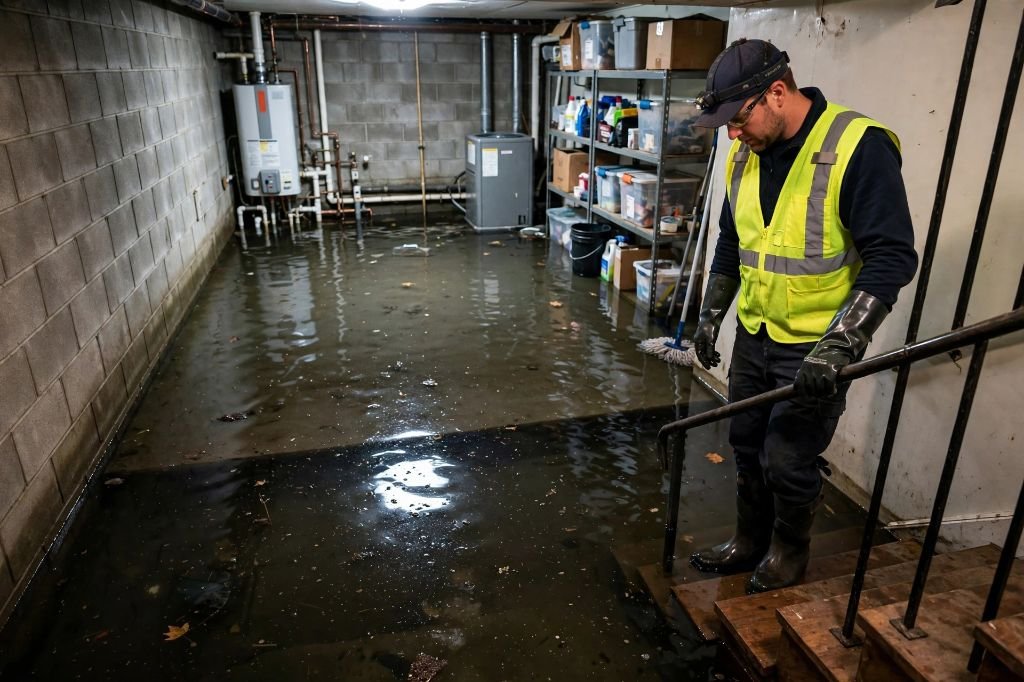
Quick 60-Minute Emergency Checklist
Stay out of standing water if power may be on. Turn off power from a dry, safe place. Stop the water source if you can do it safely. Call emergency basement flood cleanup in Everett, WA. Take photos and video before you move anything. Move valuables to a dry area if it is safe. Do not use household fans in a sewage area, and do not cut drywall before the damage is documented. Stay out of standing water if power may be on. Turn off power from a dry, safe place. Stop the water source if you can do it safely. Call emergency basement flood cleanup in Everett, WA. Take photos and video before you move anything.
Minutes 0-5: Stay Safe First
Do not step into standing water if outlets, cords, or your breaker panel may be wet. Water and power together can cause a serious shock.
The problem here is simple and dangerous. Basements hold furnaces, water heaters, washers, and breaker panels at floor level. When water reaches them, the whole wet area can become unsafe. Many people get hurt because they rush in to save boxes or check the pump.
The solution is to pause and check from a dry place. Go to your breaker panel only if you can reach it without standing in water. Turn off power to the basement circuits. If the panel is in the flooded area, stay out and call your utility company or a restoration team. They can guide you by phone until help arrives.
Sewage water adds another risk. If water smells bad, looks dark, or comes from a toilet or floor drain backup, treat it as Category 3 black water. It can carry bacteria and harmful germs. Keep children and pets away. If you smell gas, leave the house and call from outside. Wear rubber boots, gloves, and eye protection if you must enter a dry edge of the area. Our emergency team uses full protective gear for this exact reason, so you do not have to take that risk alone.
- Electrical Shock Hazard Warning
- Potential Sewage Backup Risk
- Keep Children & Pets Safely Evacuated
Minutes 5-15: Stop the Source of Water
If a pipe has burst, turn off your main water shutoff valve. This valve is often near the water meter, where water enters your home.
The problem is that water keeps coming while you think about what to do next. Every extra gallon soaks deeper into walls and floors. A burst pipe can release hundreds of gallons in a short time. A failed sump pump has the opposite problem. Water has no way out, so it rises from the floor.
The solution depends on the cause. For a burst pipe, close the main shutoff. For a water heater or appliance leak, close its supply valve, and unplug the appliance only if it is not sitting in water. For a sump pump failure, check its power, breaker, and float switch, but do not work on it while you stand in water. A stuck float or a tripped breaker is a common, simple cause in Everett storms.
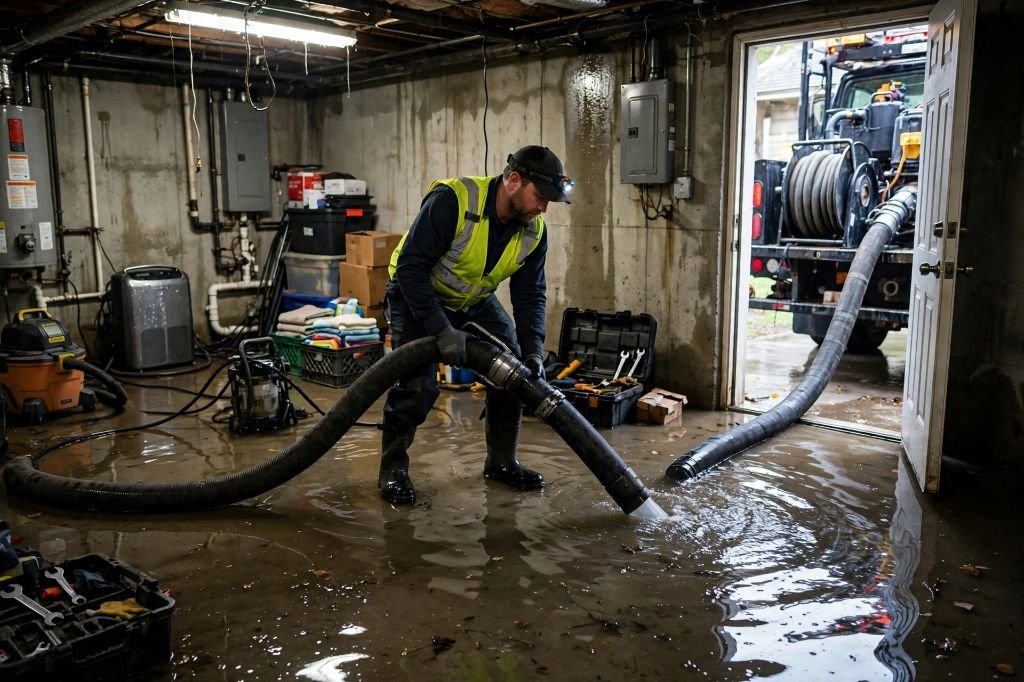
If water comes from heavy rain, groundwater, or a sewer backup, you may not be able to stop it from inside. In that case, stop using sinks, showers, toilets, and the washer. Extra water down the drain can come back up through a floor drain and make the flood worse. This is where professional water extraction becomes the solution, not more DIY work.
Minutes 15-30: Call Emergency Restoration and Document the Damage
Call a 24/7 emergency water damage restoration company in Everett right away. Early water extraction and structural drying help prevent mold and deeper damage.
The problem after the first 15 minutes is time. Mold can start within 24 to 48 hours on wet drywall, carpet, and wood. Hidden water behind walls keeps causing damage even after the floor looks dry. Insurance claims also get harder when there is no clear record of what happened first.
The solution is a fast call plus clear documentation. Tell the team how much water you see, how long it has been there, which rooms are wet, and whether it may be sewage, a burst pipe, or sump pump failure. This helps them bring the right pumps, air movers, and dehumidifiers.
Take photos and video before you move furniture or remove carpet. Photograph water lines on walls, wet boxes, damaged flooring, and the source if you can see it safely. Do not cut drywall or tear out flooring before the team documents the damage. Clear photos, moisture maps, and reports help your adjuster approve the claim faster. Everett Restoration Pros offers 24/7 response in Everett, WA, and Snohomish County, with a 30 to 60 minute dispatch goal, direct insurance billing, and thermal imaging inspection. Call (425) 380-0631 for fast help.
Minutes 30-60: Protect Your Belongings and Avoid Mistakes
Move valuables, electronics, and important papers to a dry area if it is safe to do so. Put foil or blocks under furniture legs to keep them out of water.
The problem in this phase is secondary damage. Wet furniture stains floors. Wet paper and photos are hard to save later. Wet carpet padding holds water and grows mold fast, even if the carpet surface looks dry.
The solution is small, safe moves, not a full cleanup. Lift items off the floor. Open doors between rooms for airflow only if the water is clean and power is safely off. Keep a list of damaged items for insurance.
Avoid common mistakes that make things worse. Do not use household fans in a sewage area, because they can spread germs and mold spores through the air. Do not turn up the heat to dry the space, as warm air can push moisture deeper into walls. Do not use a household vacuum on a live circuit. For deep water, wait for professional truck-mounted extraction. Pumping a basement too fast during heavy ground saturation can stress foundation walls, so pros pump in controlled steps and check the structure as they go.
After the First 60 Minutes: Extraction, Drying, and Other Services
After the first hour, the team removes standing water and starts structural drying. This step is key to stop mold growth, warping, and long-term structural damage.
This is where most homeowners feel relief, because the work becomes clear and planned. First comes water extraction. Crews use submersible pumps and truck-mounted extraction to pull water from floors, carpet padding, and concrete pores. This is faster and safer than a home shop vacuum, especially for deep water.
Next comes structural drying. Air movers and LGR dehumidifiers dry walls, subfloors, and framing. Thermal imaging cameras and moisture meters find hidden water behind drywall, under floors, and in insulation. The team checks moisture levels each day and stops only when readings are back to normal. Structural drying often takes 3 to 5 days. Full repair, including drywall and flooring, often takes 1 to 2 weeks for a standard home.
Other services solve the problems that follow a flood. Mold remediation removes mold, treats the area, and uses HEPA filtration for clean air. Sewage cleanup uses full protective gear, safe removal, and disinfection for Category 3 water. Reconstruction replaces damaged drywall, flooring, and trim and returns the home to its pre-loss condition. Commercial restoration helps businesses limit downtime, protect stock, and keep clear records for insurers. Each service is documented with photos, moisture maps, and direct Xactimate billing where it applies, so you are not left to explain the damage alone.
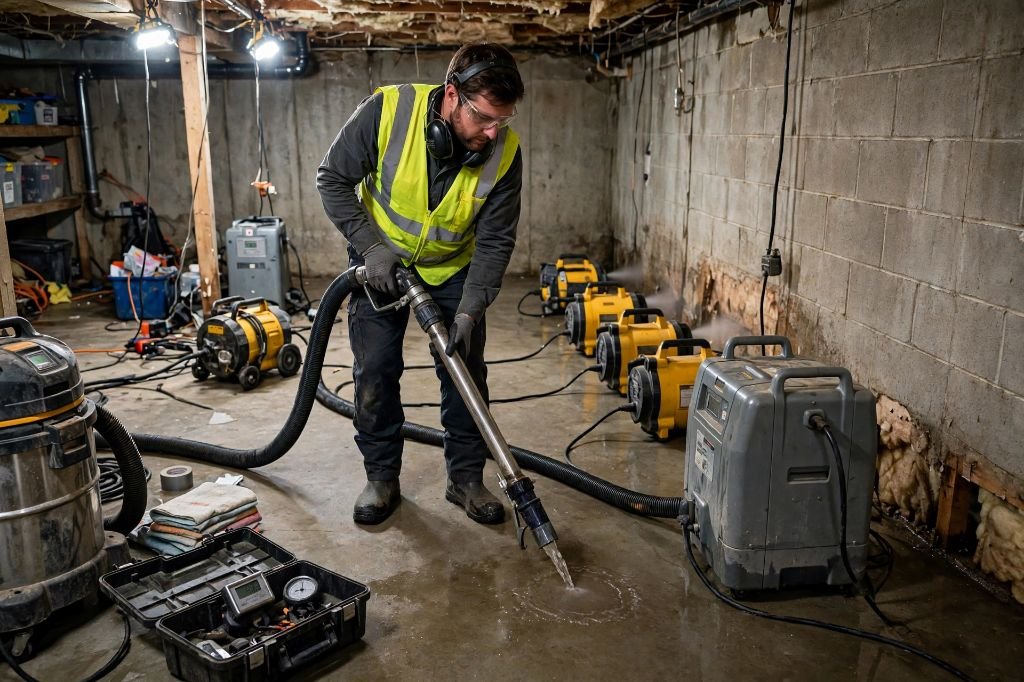
What to Expect During Structural Drying
- Truck-Mounted Extraction: Rapidly pulls bulk standing water from flooring
- Industrial Air Movers: Circulates high-velocity air to accelerate evaporation
- LGR Dehumidification: Low Grain Refrigerant systems pull moisture from framing
- Thermal Imaging Cameras: Pinpoints invisible moisture pockets behind drywall
The Hidden Problem: Water You Cannot See
Hidden moisture is the biggest reason a basement looks dry but still smells musty weeks later. Water hides behind drywall, under flooring, and inside wall framing.
The problem is that surface drying alone does not fix it. Wet insulation and wood framing can rot, warp, and grow mold out of sight. A musty smell, peeling paint, bubbling wallpaper, or warped wood are early signs of hidden moisture.
The solution is moisture mapping, not guessing. Thermal imaging shows cold, wet areas behind walls without tearing them open. Moisture meters measure how wet wood and drywall really are. Our team uses both, plus daily psychrometric checks, to prove the structure is truly dry before repair starts. This step protects your home value and your health, and it gives your insurer a clear, honest record.
Why Basements Flood in Everett, WA, and Where We Serve
In Everett, heavy rain, high groundwater, and sump pump failure are common causes of basement flooding. Aging plumbing, burst pipes, and sewer backups also cause many floods.
Everett homes face a local mix of risks. Storms saturate soil in the Pacific Northwest. Homes near the Snohomish River and low areas in Snohomish County face extra pressure from groundwater. Older homes may have aging pipes, old sump pumps, and drains that back up during heavy rain. That is why a local team matters. They know Everett soil, weather, and building styles, and they can spot risks that a generic guide cannot.
We serve 98201 Downtown Everett, Bayside, Riverside, Delta, and Northwest Everett; 98203 South Forest Park, View Ridge-Madison, Glacier View, Boulevard Bluffs, and Lowell; 98204 Westmont, Holly, Paine Field Area, and Casino Road; 98208 Silver Lake, Cascade View, Twin Creeks, and Pinehurst-Beverly Park; and 98213 Providence Regional Medical Center Area, plus the wider Snohomish County area.
Everett Service Areas & ZIP Codes
- 98201: Downtown Everett, Bayside, Riverside, Delta, Northwest Everett
- 98203: South Forest Park, View Ridge-Madison, Glacier View, Boulevard Bluffs, Lowell
- 98204: Westmont, Holly, Paine Field Area, Casino Road
- 98206: Main Post Office (Downtown PO Boxes)
- 98207: Carrier Annex (Postal Sorting Facility)
- 98208: Silver Lake, Cascade View, Twin Creeks, Pinehurst-Beverly Park
- 98213: Providence Regional Medical Center Area
Cost and Insurance: What to Expect
The cost depends on the water type, the size of the wet area, and how long drying takes. Clean water costs less than grey water or sewage cleanup.
The problem for many homeowners is not just the repair bill but the claim. Sudden and accidental losses, like a burst pipe or a failed water heater, are often covered by home insurance. Slow leaks and outside flooding are often not covered without extra flood cover. Without good documentation, even a valid claim can be delayed.
The solution is to document early, ask for a clear scope of work, and get a free assessment before repair starts. Everett Restoration Pros offers a free assessment, clear upfront pricing, and direct insurance billing to help with your claim. After restoration, prevention lowers the chance of a second flood. Ask about a battery backup sump pump, sump pump checks before storm season, better drainage, a vapor barrier for crawl spaces, and sealing foundation cracks. These steps do not guarantee no future flood, but they reduce risk in a meaningful way.
FAQs
Should I turn off power if my basement is flooded?
Yes, turn off power if you can reach the panel safely from a dry place. Do not step into water to reach the panel.
If the panel is wet, stay out and call your utility company. Safety comes first, before any cleanup or saving belongings.
How fast can mold grow after a basement flood?
Mold can start within 24 to 48 hours on wet drywall, carpet, and wood. Fast drying is the best way to stop it.
The IICRC S500 standard calls for drying to start within 24 to 48 hours. Every hour of delay can raise cost, health risk, and repair scope.
Can I pump out my flooded basement myself?
You can remove shallow water with a wet-dry vacuum if power is safely off. For deep or sewage water, call professionals.
Pros use safe pumps, check for hidden moisture, and dry the structure to set targets. This lowers the risk of mold, rot, and foundation damage.
Will home insurance cover a flooded basement in Everett, WA?
Sudden losses, like a burst pipe, are often covered. Gradual leaks and regional flooding are often not covered without a flood rider.
Document all damage with photos and video, and share reports with your adjuster. Direct billing and clear moisture records make the claim process easier.
What should I do while I wait for the restoration crew?
Stay safe, keep children and pets away from wet and sewage areas, and protect valuables if it is safe to do so.
Do not start major demolition, do not run fans in a sewage area, and do not throw away damaged items before they are photographed. The crew will guide the next steps on arrival.
Call Everett Restoration Pros Now
If your basement floods in Everett, WA, do not wait until morning. Water damage grows with time, and fast help can save your home, your health, and your money.
Everett Restoration Pros is open 24/7 for emergencies. Call (425) 380-0631, or visit 2185 Hewitt Ave, Everett, WA 98201, for fast basement flood cleanup, water extraction, structural drying, mold remediation, and sewage cleanup across Everett, WA, and Snohomish County.
- 2185 Hewitt Ave, Everett, WA 98201
- Available 24 hours a day, 7 days a week